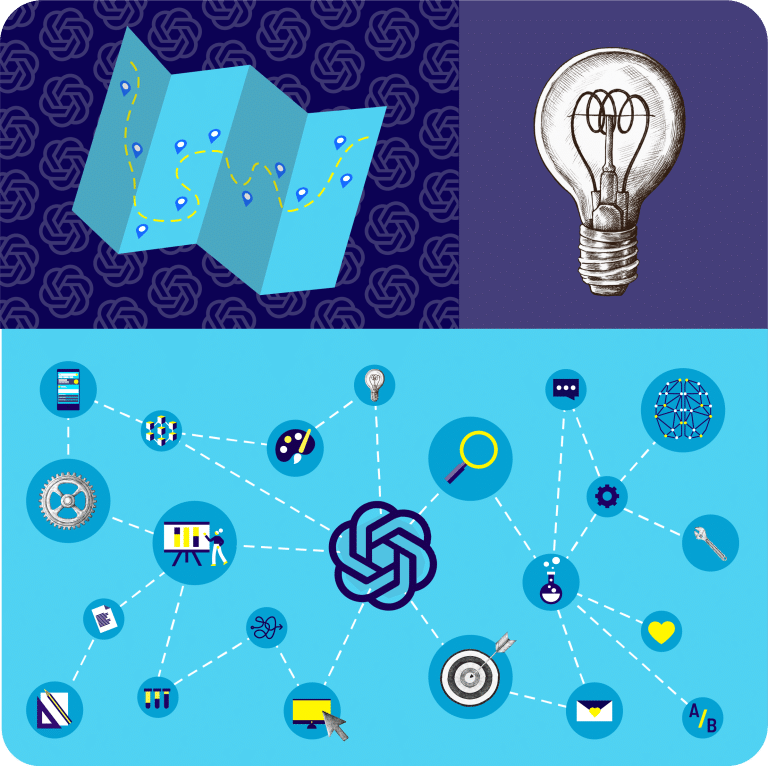
Why are traditional funnels failing in 2026?
Traditional funnels are failing because customer journeys are no longer predictable or sequential. The rigid stages of “awareness, interest, desire, action” simply don’t capture the complex, non-linear paths customers take today. Prospects jump between platforms, interact with brands in varied ways, and often make decisions based on multiple, seemingly unconnected touchpoints. This constant flux demands a more agile and interconnected strategy than a simple funnel can provide.
How does AI reshape customer discovery?
AI discovery changes how people find and evaluate brands by making the journey less direct and more personalized. Instead of actively searching, users are increasingly presented with recommendations, summaries, and instant answers powered by generative AI. This means brands must focus on being present across diverse touchpoints, providing high-quality, verifiable information, and building a strong digital footprint that AI models can easily parse and cite.
- AI-Driven Search: AI assistants often provide direct answers, reducing clicks to websites.
- Content Synthesis: AI summarizes information from various sources, making comprehensive, authoritative content crucial.
- Personalized Recommendations: Algorithms suggest products and services based on complex behavioral data, requiring brands to understand diverse user signals.
- Voice Search & Conversational AI: Customers interact with brands through natural language interfaces, emphasizing clarity and immediate value.
- Data Integration: AI tools integrate data across platforms, creating a holistic view of customer intent and behavior, demanding a unified data strategy.
Building a multi-touch ecosystem for growth
Multi-touch ecosystems outperform rigid funnel models by acknowledging the reality of modern customer engagement. Instead of pushing prospects through a singular pipeline, a multi-touch approach creates a network of interconnected experiences where customers can enter, exit, and re-enter at any point. This involves leveraging diverse channels, fostering cross-platform presence, and ensuring consistent brand messaging across all interactions. Your strategy needs to be fluid, allowing for myriad paths to conversion.
Future proof your career: Skills for the AI search era
Community, education, and trust replace pure funnel tactics as the core drivers of sustainable growth in 2026. In an age of information overload and AI-generated content, genuine connection and value-driven learning build unparalleled loyalty. By investing in communities and offering valuable educational resources, brands can establish themselves as trusted authorities, fostering deep engagement that goes beyond transactional relationships.
- Shared Learning Environments: Create spaces where customers can learn from you and each other.
- Expert-Led Content: Position your brand as a source of credible, practical knowledge.
- Authentic Engagement: Facilitate real conversations and support networks.
- Transparency: Be open about your processes and values to build credibility.
- Problem-Solving Focus: Offer solutions and guidance, not just products.
Adaptive experimentation: Your new growth imperative
Growth requires adaptive experimentation across channels to navigate the dynamic digital landscape effectively. The days of set-it-and-forget-it campaigns are over. Instead, implement a continuous loop of testing, learning, and iterating across all your customer touchpoints. This agile mindset allows you to quickly identify what resonates with your audience and pivot strategies based on real-time data, ensuring your growth efforts remain relevant and impactful.
- Hypothesis-Driven Testing: Formulate clear hypotheses for every campaign element.
- A/B Testing Everywhere: Test headlines, CTAs, visuals, and channel effectiveness.
- Rapid Iteration Cycles: Implement learnings quickly and refine strategies.
- Cross-Channel Measurement: Understand how experiments impact performance across your entire ecosystem.
- Culture of Learning: Encourage your team to embrace failure as a step towards success.
The death of the linear funnel isn’t an ending, but a new beginning for dynamic, human-centric growth. Embrace the complexity, leverage the power of AI, and build an ecosystem where every touchpoint is an opportunity for connection and value. Boost your team with Growth Tribe. Connect with our experts to accelerate your AI journey. Don’t figure this out alone. Join our new Skool community to learn alongside other pioneers. Join the tribe: https://www.skool.com/ai-tribe/about (opent in nieuw tabblad)
FAQ
Linear marketing funnels are being replaced by dynamic, multi-touch ecosystems. These new models account for non-sequential customer journeys, AI-driven discovery, and the growing importance of community, education, and trust over traditional funnel tactics.
AI fundamentally changes customer discovery by offering personalized recommendations and direct answers, reducing reliance on traditional search. Brands must adapt by creating high-quality, verifiable content across multiple platforms to be visible and citable by AI assistants, ensuring presence in these new discovery pathways.
A successful multi-touch growth strategy integrates adaptive experimentation, community building, and educational content across various channels. This approach focuses on creating interconnected customer experiences, fostering trust, and continuously optimizing based on real-time data to meet customers wherever they are in their non-linear journey.
Community-led growth is crucial because it builds authentic trust and deep engagement, which are invaluable in an era saturated with AI-generated content. By providing value through shared learning and genuine connection, brands can cultivate loyal advocates and establish themselves as credible authorities, fostering relationships beyond mere transactions.
Businesses can implement adaptive experimentation by establishing a continuous loop of hypothesis-driven testing across all customer touchpoints. This involves rapid iteration cycles, A/B testing various elements, and cross-channel measurement to quickly learn from data and pivot strategies, ensuring agility and relevance in a constantly evolving market.